Fertilizer Market in Ukraine: Time to Buy Amid Global Downturn?
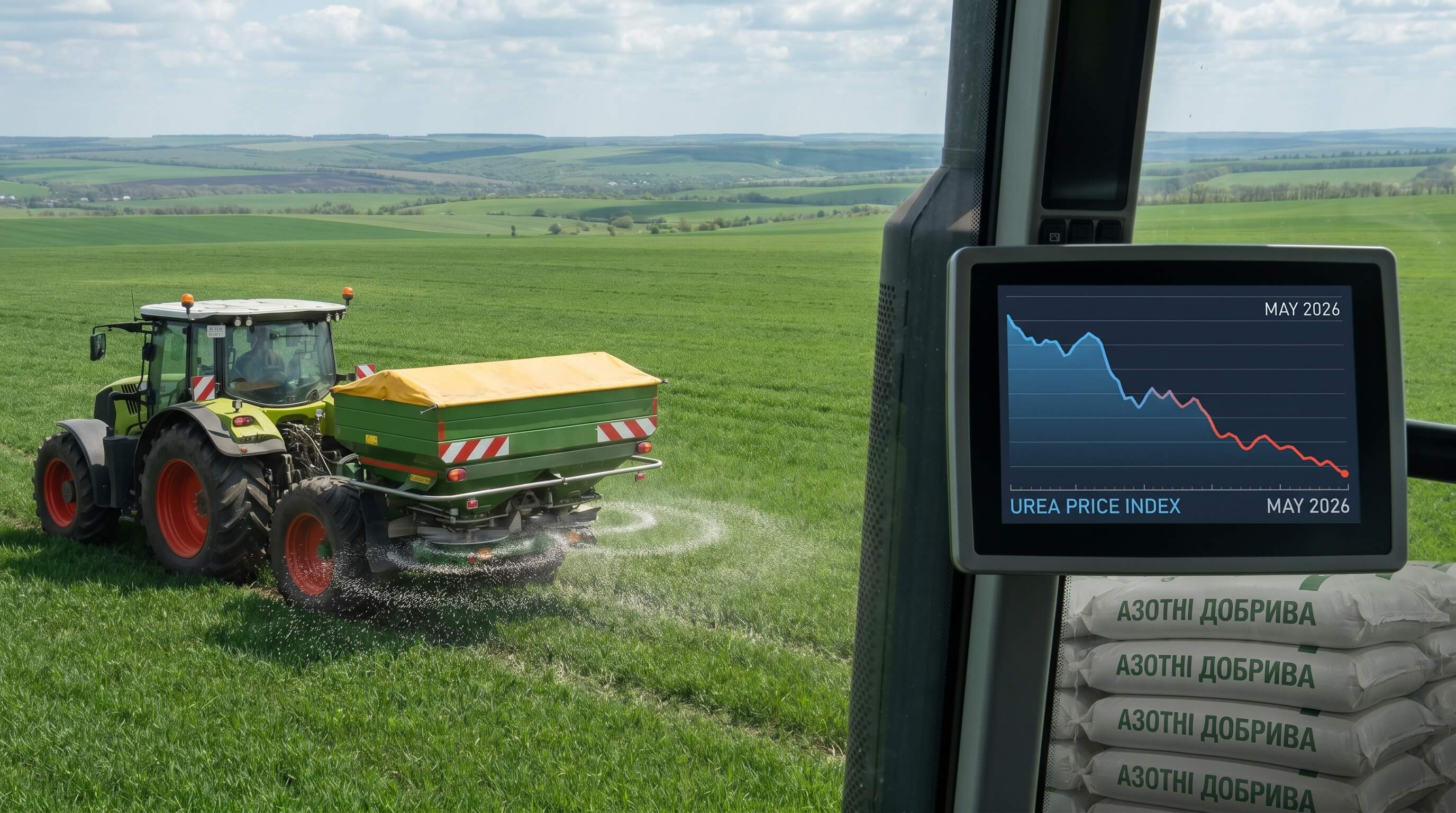
In early May 2026, the global nitrogen fertilizer market is experiencing a rare and paradoxical situation: despite a structural supply deficit, prices for key products, particularly urea, are showing a sharp decline. This trend, driven by a lull after a major Indian tender and geopolitical uncertainty, creates a unique but likely short-lived window of opportunity for Ukrainian agricultural enterprises. While the spring planting season is already complete, now is the time to build strategic reserves for future periods at potentially more favorable prices.
For Ukraine, where fertilizer imports remain critically important, the current drop in global prices is a significant factor that could positively impact the cost of future harvests. According to industry reports, Ukraine increased its fertilizer imports to 3.28 million tons in 2025, a 13% increase from the previous year. This highlights the agricultural sector's heavy reliance on external supplies, especially for the nitrogen group. In such conditions, the ability to react quickly to global price fluctuations becomes a key element of competitiveness.
Key Factors Influencing the Market
Currently, the nitrogen fertilizer market is under the influence of several powerful but conflicting factors. On one hand, there is a temporary drop in demand from key players, which is putting pressure on prices. On the other hand, significant risks remain that could quickly turn the market toward growth.
Geopolitical Tensions Around the Strait of Hormuz
One of the main elements of uncertainty is the negotiations between the U.S. and Iran regarding the status of the Strait of Hormuz. This narrow sea lane is a critical artery for world trade, through which a significant portion of global fertilizer exports pass. A potential agreement and the reopening of the strait could lead to a further price decline due to increased supply. However, any escalation or breakdown in negotiations would instantly trigger a price spike, as the market remains structurally deficient. This uncertainty is causing buyers to adopt a wait-and-see approach, which is creating the current downward pressure on prices.
New Export Tax in Egypt
An additional complicating factor is the recent decision by the Egyptian government to impose a temporary export duty on all types of nitrogen fertilizers. This move by one of the world's largest producers will inevitably affect the availability of products in markets that rely on Egyptian imports, including Europe and potentially Ukraine. According to expert studies, export restrictions typically lead to an increase in international prices by reducing global supply. Although the full effect of this measure has not yet materialized, it creates additional risks for supply chains in the medium term.
In-Depth Market Analysis: Opportunities and Risks for Ukraine
For Ukrainian farmers, the current market situation looks attractive but requires a balanced approach. The decline in urea prices in Latin American and U.S. markets is an indicator of a global trend that opens up opportunities for securing favorable forward contracts. However, it would be reckless to ignore the risks.
According to World Bank forecasts, global fertilizer prices could rise significantly in 2026 due to geopolitical conflicts and logistical disruptions. This is also confirmed by data from the Food and Agriculture Organization of the United Nations (FAO), which warns that a fertilizer shortage caused by logistical failures could lead to lower yields in the second half of 2026 and into 2027. Thus, the current downturn may only be a temporary calm before a new wave of growth.
The fertilizer market in Ukraine at the beginning of 2026 was characterized by a fragile balance, where a formally sufficient supply is vulnerable to logistical and energy risks. Domestic production remains limited, increasing dependence on imports. In such conditions, where the physical availability of fertilizers can become an issue, price takes a backseat. Therefore, building up stocks during a period of price decline is a strategically sound move to minimize future risks.
Strategic Outlook and Conclusion
In the next 1-3 months, the nitrogen fertilizer market is likely to remain volatile. The key trigger for a trend reversal could be a new major tender from India or any news regarding the situation in the Strait of Hormuz. If the strait remains closed and Chinese producers do not enter the export market, the price bottom could be reached very quickly, and the market would return to growth.
For Ukrainian agricultural enterprises, this means that the period of relatively low prices will not last long. Postponing purchases in the hope of further price reductions is a risky strategy. A much more prudent approach is to use the current moment to purchase a portion of the required fertilizer volume, which will allow for locking in a favorable price and hedging against future price spikes and potential supply disruptions.
Working with experienced importers who have diversified supply channels and a deep understanding of the global market is becoming critically important. Such partners can help not only to secure favorable price conditions but also to ensure the reliability and timeliness of deliveries in challenging market conditions. Given the high probability of a market reversal, we recommend consulting with reliable suppliers now and considering contracting. Contact us to get a current quote and discuss your procurement strategy.