Global Mineral Fertilizer Market September 2026: Strategic Insights for Ukraine
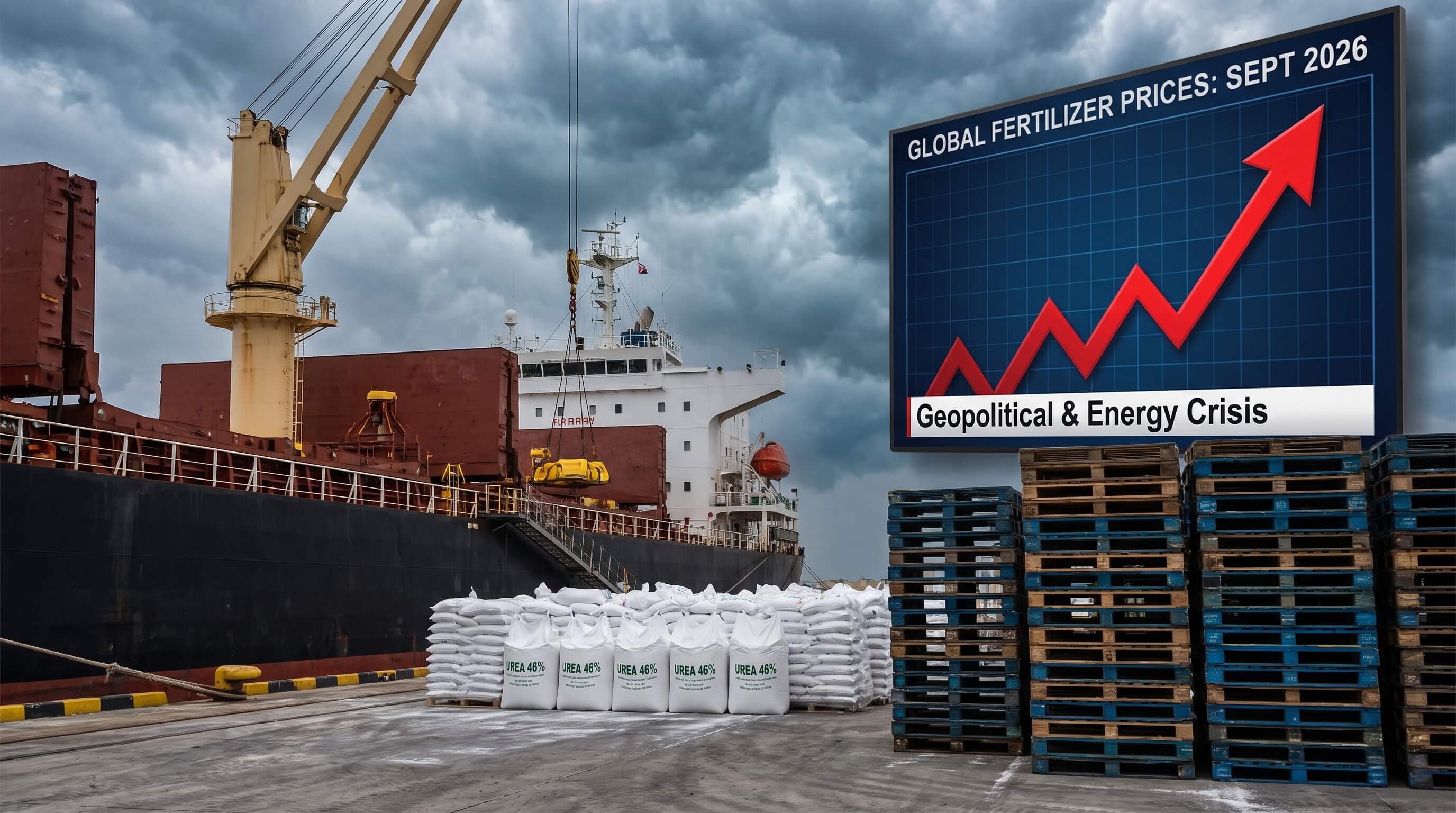
The Global Mineral Fertilizer Market: A Perfect Storm Ahead of the Sowing Season
The global agricultural landscape in September 2026 is navigating a period of profound turbulence, driven by a convergence of escalating geopolitical conflicts and extreme volatility in global energy markets. For Ukrainian farmers and agricultural enterprises, these macroeconomic shifts are not merely distant headlines; they represent immediate, tangible impacts on the cost and availability of critical crop inputs. As the autumn application season progresses and planning for the crucial spring sowing campaign begins, understanding the trajectory of the global mineral fertilizer market is absolutely paramount.
The current market dynamics underscore a harsh reality: securing reliable supplies of nitrogen, phosphorus, and complex fertilizers will require strategic foresight and timely decision-making. The traditional seasonal price dips that many producers rely on are being overridden this year by powerful global factors that are simultaneously pushing prices upward and restricting physical product availability.
Escalating Geopolitical Tensions and Supply Chain Disruptions
The international market for nitrogen fertilizers, particularly urea, has experienced a sharp upward trajectory throughout September. This surge is predominantly fueled by escalating hostilities in the Middle East, which have severely disrupted maritime logistics and cast a shadow of uncertainty over one of the world's most critical fertilizer supply regions. The effective restriction of vessel movements through the Strait of Hormuz has essentially choked off a significant portion of the global trade in urea and ammonia. According to the Food and Agriculture Organization (FAO), global fertilizer prices have resumed an upward trajectory in 2026, directly reflecting severe disruptions to maritime transit through the Strait of Hormuz.
Consequently, major import hubs west of Suez, including the Americas and Europe, are scrambling to secure alternative cargoes. This creates fierce competition for available volumes from North Africa and other accessible regions, inevitably driving up FOB prices. Furthermore, the global market had heavily anticipated relief from Asian suppliers to balance the deficit. However, Chinese export allocations remain noticeably pending. The combination of constrained Middle Eastern supply and absent Chinese volumes has created a substantial supply-demand imbalance, leaving a massive wall of unmet demand as major agricultural economies prepare for the fourth quarter.
The European Energy Crisis Resurfaces and Threatens Nitrogen Production
Compounding the geopolitical supply constraints is a severe resurgence of the European energy crisis. European natural gas prices, benchmarked by the TTF, have surged to fresh highs not witnessed since December 2022. Because natural gas constitutes the overwhelming majority of the production cost for nitrogen fertilizers—serving as both the primary energy source and the essential chemical feedstock—this price spike is sending shockwaves through the European chemical manufacturing sector.
The gap between theoretical production costs and current market prices for calcium ammonium nitrate (CAN) and ammonium nitrate (AN) is widening alarmingly. If European gas prices remain elevated, industry analysts anticipate a wave of production curtailments and plant shutdowns across the continent. Such a scenario would dramatically reduce regional fertilizer availability, forcing European distributors to aggressively bid for imported cargoes, thereby intensifying competition and driving up global prices further. For Ukraine, which relies significantly on European origins for specific fertilizer grades and specialized logistics, a contraction in EU manufacturing capacity poses a direct threat to import volumes during the critical winter and early spring procurement windows.
Macroeconomic and Logistical Challenges for the Ukrainian Agribusiness
The ripple effects of these global disruptions are already being acutely felt within Ukraine. The National Bank of Ukraine (NBU) has highlighted that rising global prices for energy resources and nitrogen fertilizers, linked to Middle Eastern conflicts, exert significant pressure on the macroeconomic balance and increase operational costs for farmers. For the Ukrainian agribusiness sector, this translates to a dual challenge: rising baseline costs for fertilizers and increasingly complex, expensive import logistics.
While global FOB prices dictate the general market trend, the final delivered cost to a Ukrainian farm is heavily influenced by regional logistics. Stringent security restrictions regarding the handling of certain bulk fertilizers at Ukrainian sea ports have forced many importers to rapidly reroute shipments through alternative European transit corridors. This necessary pivot increases reliance on cross-border rail and truck logistics, adding substantial freight premiums and extending delivery lead times. In this bottlenecked environment, waiting for traditional seasonal price corrections is a highly risky procurement strategy.
Strategic Outlook and Market Positioning
Looking ahead over the next 30 to 60 days, the fundamental outlook for mineral fertilizers points toward continued firmness, with a strong potential for further price escalation. As long as the Middle East conflict remains unresolved and European energy markets stay volatile, the structural deficits in global fertilizer supply will persist. The only potential bearish catalyst on the horizon would be a sudden and massive issuance of export quotas by China, but relying on unpredictable policy shifts is not a sound foundation for agricultural planning.
For Ukrainian agricultural enterprises, the current market conditions demand proactive risk management. Securing your nitrogen, phosphorus, and NPK requirements now is essential to safeguard your upcoming crop yields and protect your operational budget from further inflationary shocks. Delaying purchases could result in physical product unavailability at the height of the season.
Working with established and experienced import partners has never been more critical. Professional importers possess the logistical agility, secured international allocations, and deep market intelligence required to navigate these turbulent waters. We can ensure that critical inputs reach your fields exactly when needed, bypassing the logistical bottlenecks that often trap less experienced operators. Contact our expert team today to discuss current availability, secure your volumes, and firmly lock in your supply chain ahead of the impending spring rush.