Urea Market Analysis: Global Price Surge and Its Impact on Ukraine
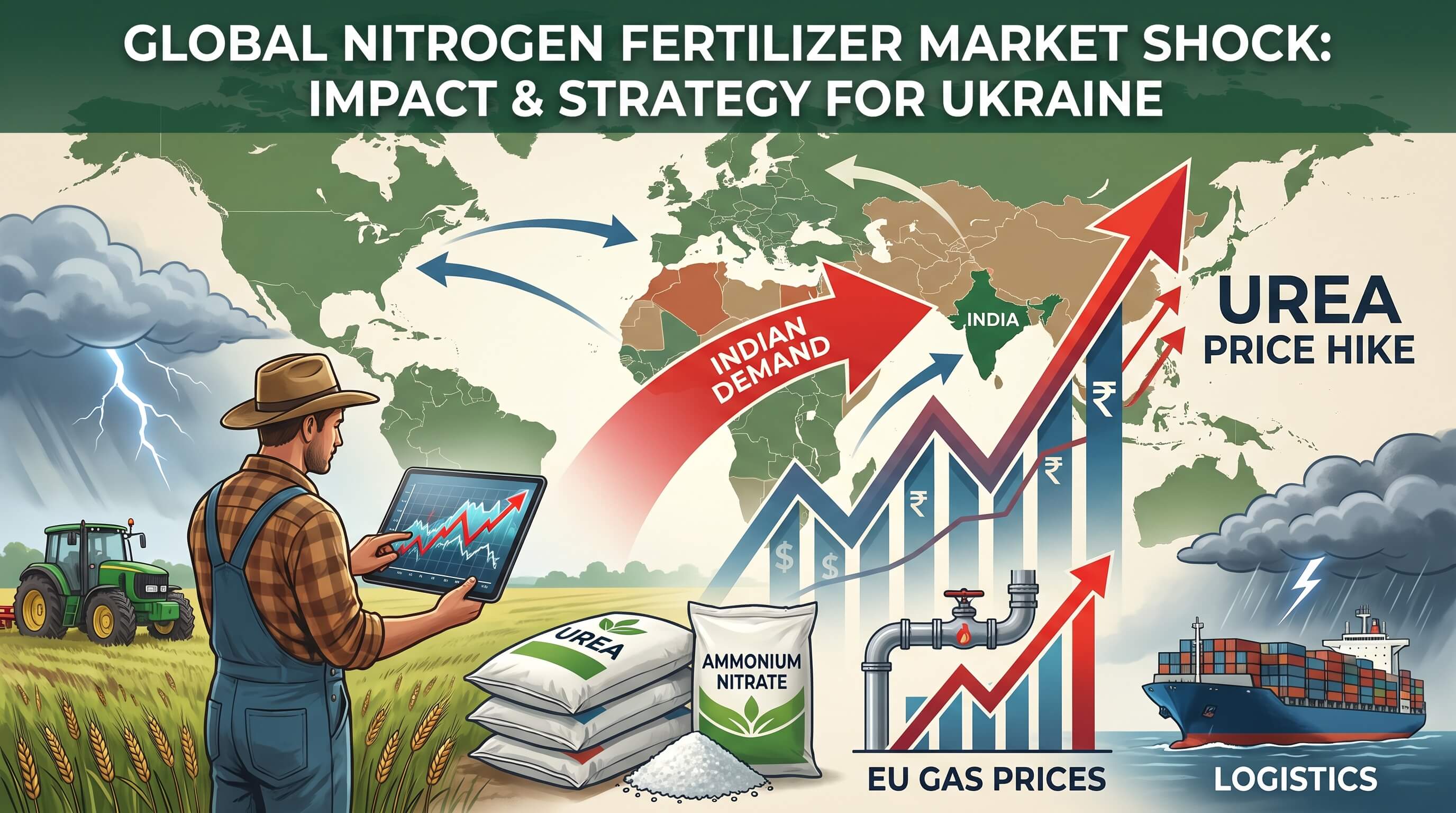
The global nitrogen fertilizer market, after a period of relative stability, has experienced a sudden jolt. Recent weeks have seen a sharp rebound in urea prices, triggered by a significant surge in demand from one of the world's largest importers, India. This event has set off a chain reaction that directly impacts the cost and availability of fertilizers for Ukrainian farmers as they prepare for the autumn sowing season and plan for spring fieldwork.
This price momentum presents new challenges for agricultural enterprises, forcing a reassessment of procurement strategies. At the same time, it opens a window of opportunity for those prepared to act proactively to shield themselves from further market turbulence. Understanding global trends is becoming crucial for making sound decisions in a rapidly changing environment.
Key Drivers of Market Change
The epicenter of the price rally was a large-scale Indian tender, which absorbed substantial volumes of urea from the market. This had an immediate effect on offers from producers in North Africa, particularly Egypt and Algeria, which are key suppliers to the global market. Consequently, prices for granular urea in these regions have shown significant growth.
Interestingly, the market has split geographically. While the West (from Africa to Brazil and the US) is experiencing a surge, markets East of Suez remain more subdued, largely due to ample supply volumes from China. However, there are signs that even Chinese supplies could face logistical or pricing hurdles, potentially further tightening available global supply.
Simultaneously, another critical factor is gaining momentum in Europe: rising natural gas prices. According to European energy exchanges, the cost of gas—the primary feedstock for nitrogen fertilizer production—continues to increase. This inevitably drives up the production cost of European products, making imported fertilizers more competitive and pushing domestic prices higher.
Analysis of Implications for Ukraine's Agricultural Sector
For Ukrainian farmers, these global processes have direct consequences. The rise in world urea prices will inevitably translate into higher costs in the domestic market. Given that the Ministry of Agrarian Policy and Food of Ukraine forecasts a solid grain harvest, the demand for nitrogen fertilizers for top-dressing winter crops and preparing for the spring season will remain high.
In the current climate, farmers may face a dilemma regarding which type of nitrogen fertilizer to choose. Rising urea prices make it more expensive, but due to higher gas costs, the production of ammonium nitrate and UAN in Europe is also becoming more costly. An analysis of the cost per unit of nutrient shows that urea may remain an economically attractive option, especially if contracted in a timely manner.
Potential logistical complications must also be considered. The global competition for available fertilizer volumes is placing increased strain on supply chains. The reliability and timeliness of imports are becoming critically important. Experienced importers with established relationships with producers and extensive logistics networks gain a significant advantage, ensuring a stable supply for their clients.
Strategic Outlook and Recommendations
The market is entering a phase of heightened volatility. An upward price trend is expected to persist over the next 1-3 months. The combination of active demand from key global players like Brazil, the US, and European countries, along with rising production costs in the European region, is creating a "perfect storm" for further price increases.
This situation sends a clear signal to Ukrainian agricultural producers: delaying the purchase of nitrogen fertilizers is risky. The current period can be seen as a relatively narrow window of opportunity to lock in prices and volumes before a new wave of price hikes. Securing the necessary fertilizers in advance will not only help optimize costs but also mitigate the risk of shortages during the peak season.
Working with reliable import partners who can offer clear terms and guarantee deliveries is becoming a key element of a successful strategy. Contact us to discuss current market conditions and receive a quote that will help you navigate this turbulent period with confidence and lay a strong foundation for the next harvest.