Fertilizer Market in a Fragile Balance: Falling EU Gas Prices and New Opportunities for Ukraine
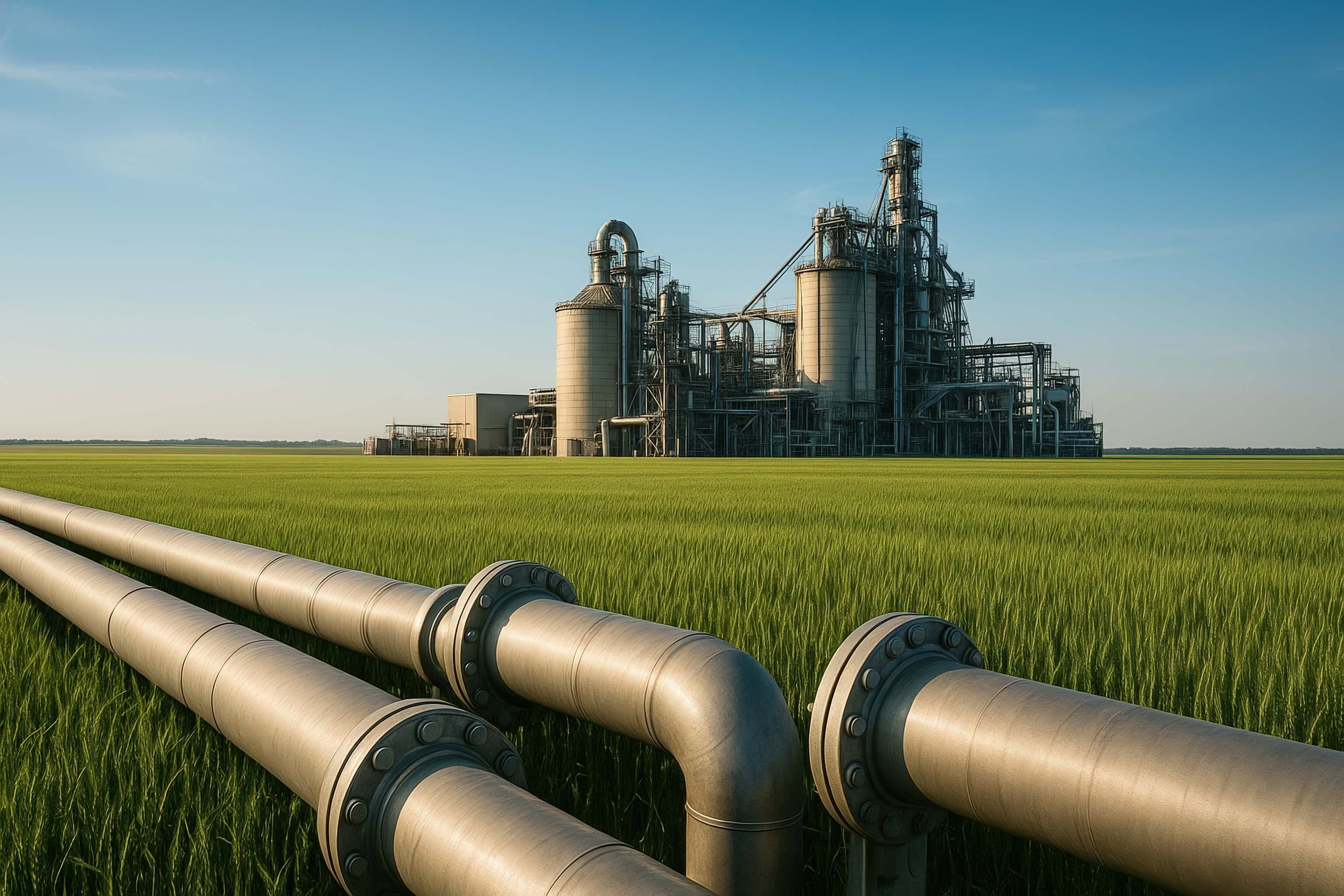
The global nitrogen fertilizer market has entered a phase of complex uncertainty. On one hand, the massive Indian tender, which concluded with the purchase of over 1.5 million tonnes of urea, has temporarily saturated demand and fostered a bearish market sentiment, putting pressure on prices in key export regions. On the other hand, a powerful new factor has come into play: a significant drop in natural gas prices in Europe, which have fallen to levels not seen since early 2024. This coincidence creates a deceptive sense of calm.
For Ukrainian agrarians, this situation is not just another price fluctuation but a unique strategic moment. The market is at a point of fragile equilibrium, where a short-term dip in demand creates an illusion of availability, while fundamental shifts in Europe's energy sector could dramatically change the rules of the game in the near future. This opens a brief window of opportunity for those capable of making swift, well-informed decisions to secure their needs for the 2026 spring campaign before the market finds a new, likely higher, equilibrium point.
Key Market Forces: Demand Subsides, Europe Re-enters the Game
Following the conclusion of the Indian tender, a temporary demand vacuum has formed in the global market. Major buyers, particularly in Brazil and the US, have adopted a wait-and-see approach, hoping for further price declines. This has led to a weakening of urea quotes from producers in the Middle East, North Africa, and the Black Sea region. However, this lull is temporary, as seasonal needs have not disappeared, and major players will soon be forced to return to purchasing.
Simultaneously, a far more significant tectonic shift is occurring. The decline in the cost of natural gas on the European TTF hub directly impacts the production cost of nitrogen fertilizers in the EU. According to Eurostat data, European producers had significantly curtailed production in recent years due to a lack of profitability. The current cheaper energy resources allow them to restore profitability and potentially increase volumes. This could lead to increased competition within the European market but also to a reduction in available volumes for export from traditional suppliers like Egypt, who will reorient towards the premium European market.
In-depth Analysis for Ukraine: New Risks and Hidden Opportunities
For Ukraine, which, according to the Ministry of Agrarian Policy and Food, remains heavily dependent on fertilizer imports, this situation has dual implications. On one hand, the current decline in global market prices allows for more favorable deals. On the other, the revitalization of European producers and renewed demand from Brazil will create significant pressure on logistics chains.
Competition for available vessels and slots in manufacturers' production schedules will inevitably increase. Experienced import partners understand that waiting for the absolute lowest price often leads to delivery delays. The moment the market turns, freight costs could surge, and finding an available vessel will become extremely difficult. This poses a risk not just of getting fertilizers at a higher price, but of receiving them late, which is unacceptable for a precise agronomic cycle.
World Bank forecasts for commodity markets in 2026 also give no reason for optimism regarding a long-term decrease in resource costs. The energy market remains volatile. The current drop in gas prices may be temporary, meaning the window for EU fertilizer producers could also be short. This only underscores that the current market situation is a temporary anomaly, not a stable trend.
Strategic Outlook and Conclusion: Acting Proactively
The forecast for the next 1-3 months indicates a high probability of a trend reversal. After a brief period of stabilization, the market is likely to resume an upward trajectory. This will be driven by two factors: the return of active purchasing by importers from Latin America and the US, and a reshaping of trade flows due to the changing economic situation for European producers. Competition for available volumes from the Middle East and North Africa will intensify.
In these conditions, a wait-and-see position becomes an unjustifiably risky strategy. The current moment provides a unique opportunity to lock in fertilizer prices before the market adapts to the new realities. Working with a reliable importer who has long-term contracts and a deep understanding of market processes allows not only for cost optimization but also for guaranteed timely and prioritized supply.
For Ukrainian agricultural enterprises, this means the time to make deals is now. Securing the necessary volumes of urea and other nitrogen fertilizers at the current, more attractive prices is a strategically sound decision. It minimizes risks associated with price volatility and logistical collapses and lays a solid foundation for the future harvest. Contact us for a detailed consultation and a price quote for your farm's fertilizer needs.