Fertilizer Market 2026: Mideast Conflict Drives Up Global Urea & N-Fertilizer Prices
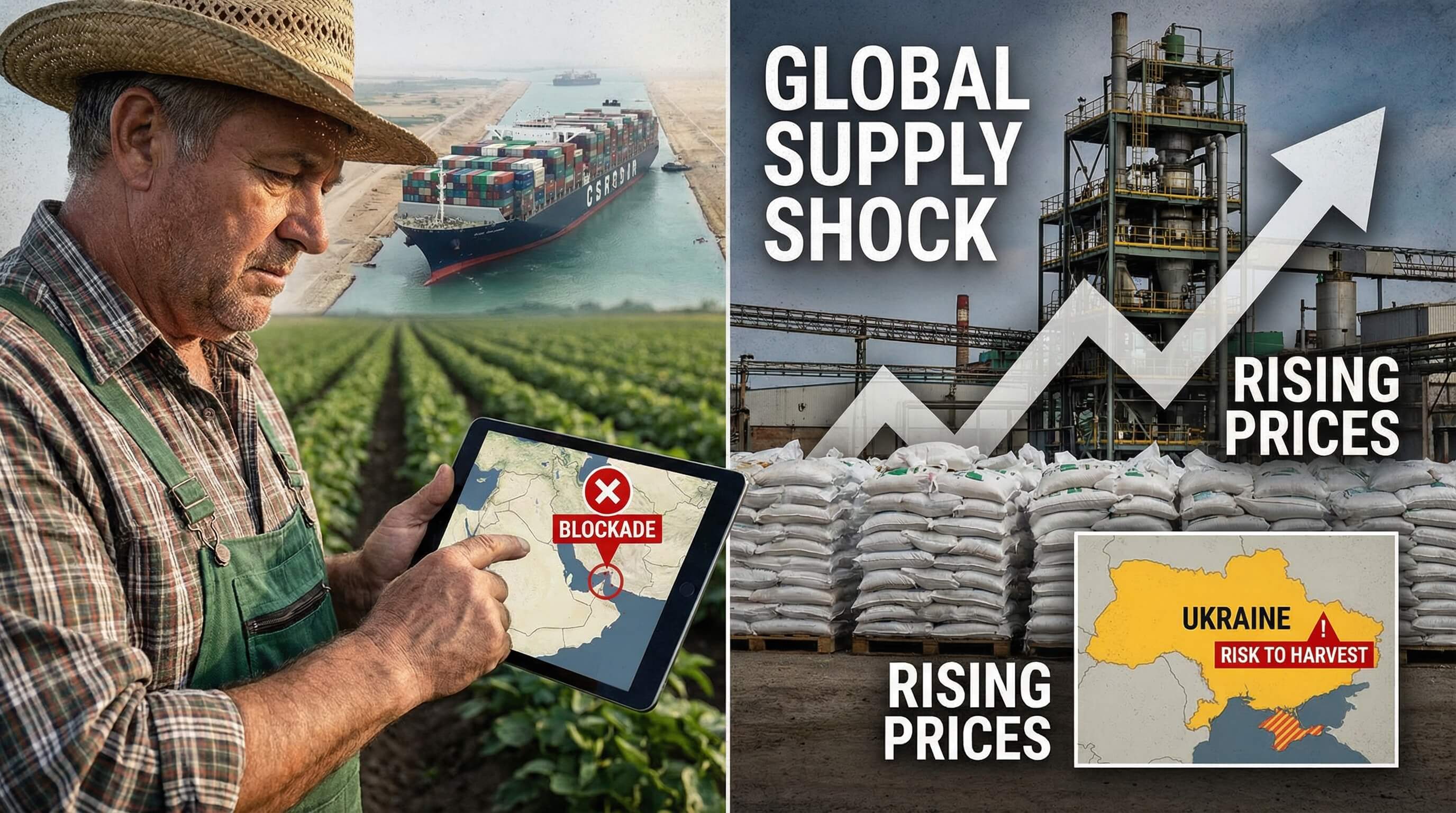
The global mineral fertilizer market is currently experiencing one of its most significant supply shocks in the last decade. Geopolitical tensions in the Middle East, leading to a de facto blockade of the Strait of Hormuz, have triggered an unprecedented crisis in the nitrogen fertilizer supply chain. This is not a localized issue; it is setting off a chain reaction that directly threatens the stability and profitability of Ukraine's agricultural sector as it approaches critical stages of the growing season.
For Ukrainian farmers and agricultural enterprises, this situation signifies more than just another price fluctuation. It represents a fundamental shift in the availability of a strategically vital resource. With key global fertilizer producers in Saudi Arabia and Qatar effectively cut off from the market, a fierce global competition for alternative volumes is unfolding. The consequences—soaring prices and logistical chaos—are already being felt, and ignoring them means jeopardizing the upcoming harvest.
Key Market Developments: Shortages and the Global Scramble
The primary impact has been on the granular urea market. Hundreds of thousands of tonnes of product are now stranded in the Persian Gulf region, creating a structural deficit on the world market. This is not a temporary dip in supply; it is the removal of producers who collectively account for a significant share of global exports. In response, prices for urea from alternative sources, such as Egypt and Nigeria, are skyrocketing, reaching multi-year highs.
The reaction of major importers like Australia, which has historically relied on Middle Eastern supplies, is particularly telling. The country is now forced to urgently seek new suppliers worldwide, paying substantial premiums for available cargoes. This creates a domino effect: limited volumes of nitrogen fertilizers from North Africa and other regions are now being diverted to these premium markets, leaving less available for other nations, including Ukraine. The situation is further complicated by the anticipation of a major tender in India, which could draw even more significant volumes of urea off the market.
This shortage is not confined to urea alone. The market is seeing heightened demand for alternative nitrogen fertilizers. Prices for urea ammonium nitrate (UAN) and ammonium nitrate are also trending upwards as consumers seek substitutes for expensive and scarce urea. Meanwhile, temporary restrictions on ammonium nitrate exports from Russia, effective until late April, are further tightening supply on the European continent and amplifying price pressure.
Deep Market Analysis: Implications for Ukraine
According to data from the Food and Agriculture Organization of the United Nations (FAO), global demand for nitrogen fertilizers remains consistently high, driven by the need to ensure global food security. The current supply crisis is superimposed on this stable demand, making the situation particularly tense. For Ukraine, where imported fertilizers constitute a significant market share, this presents several serious challenges.
First, price increases are inevitable. Ukrainian importers must now compete for available volumes on a global market where prices are dictated by panic and premium contracts. Second, significant logistical risks are emerging. Reorienting to new suppliers in Nigeria or Algeria requires rebuilding established routes, leading to longer delivery times and higher transportation costs. While some analysts might suggest the market will balance itself as new players emerge, the reality is that ramping up production and establishing new logistics chains is a process that takes months, not weeks.
Critical thinking also requires us to consider an alternative scenario: what if the conflict de-escalates quickly? Even in such an optimistic outcome, the market would need considerable time to stabilize. Idled vessels would need to be rerouted, production cycles restored, and market panic would have to subside. Therefore, the coming weeks and months will, in any case, be a period of high volatility.
Strategic Outlook and Conclusion
The forecast for the next one to three months remains tense. The nitrogen fertilizer market will be characterized by high volatility, further potential for price increases, and, most importantly, a prioritization of supply security over price. A "wait and see" strategy is exceptionally risky under current conditions. There is a high probability that waiting will not lead to savings but to a situation where fertilizer is unavailable at any price when it is needed most.
In this environment, a reliable partnership becomes the key success factor. Experienced importers with diversified supply channels and a deep understanding of global logistics are a strategic asset for any agricultural business. They can act as a buffer against market chaos, securing access to necessary fertilizer volumes on manageable terms.
Securing supplies for the upcoming season is now the top priority. Given the growing uncertainty, building up inventory and entering into forward contracts is the only prudent strategy to mitigate risk. Contact us to discuss current availability and secure your volumes today.