Fertilizer Market 2026: A Global Storm and a Window of Opportunity
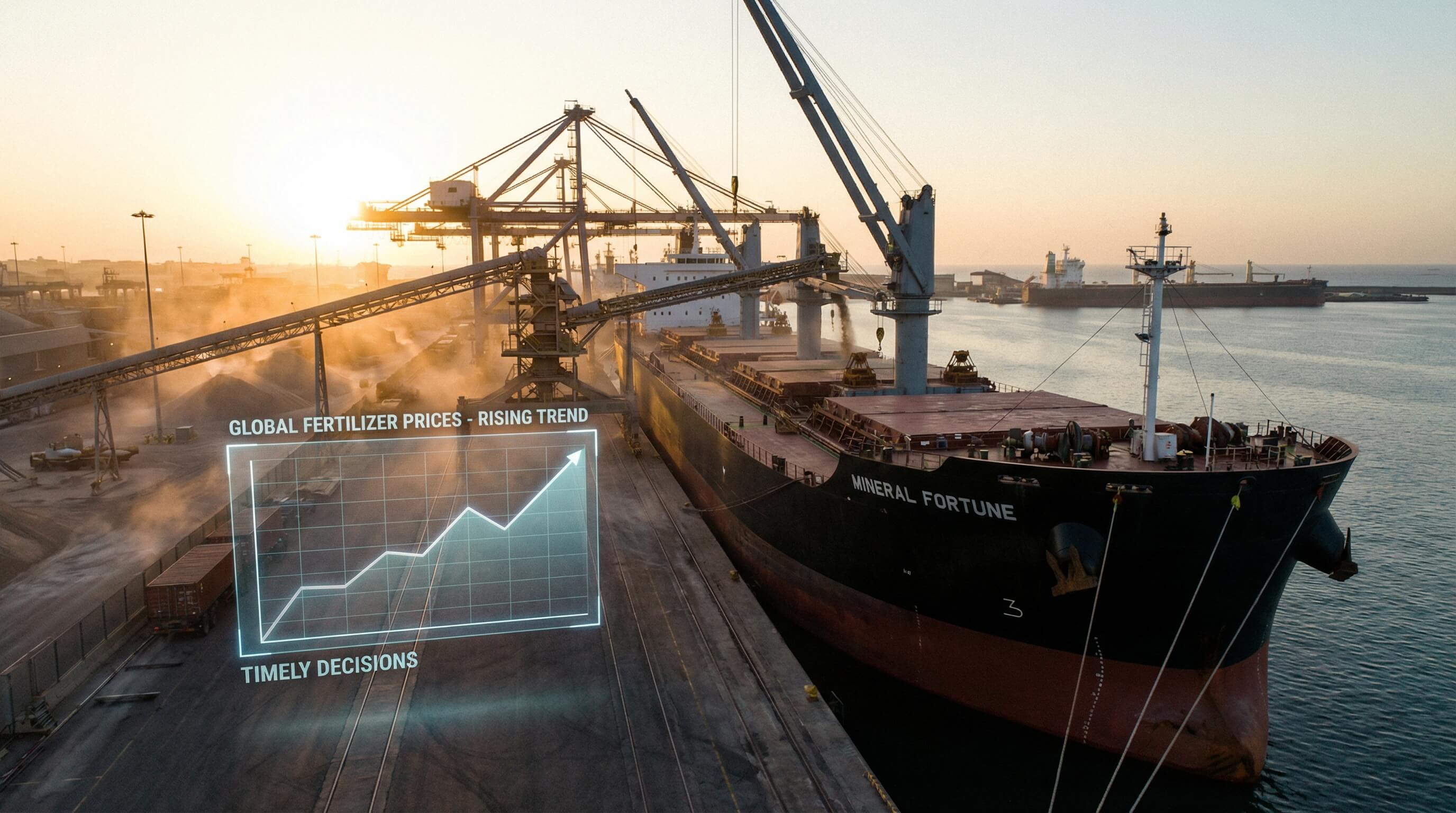
Global Pressure on the Nitrogen Market: A Critical Moment for Ukrainian Farmers
The start of 2026 has marked the formation of a "perfect storm" in the global nitrogen fertilizer market. A series of powerful factors, from extreme weather conditions in the United States to escalating geopolitical tensions in the Middle East, is creating upward pressure on prices, directly threatening the economics of the spring sowing campaign in Ukraine. The situation is further complicated by market expectations of a new large-scale tender in India, which could catalyze another price surge. For Ukrainian agricultural enterprises, a crucial period is dawning, where prudence and promptness in fertilizer procurement decisions become strategically vital.
Currently, the market sentiment is unequivocally bullish. Producers and major traders, gathered at industry conferences, are projecting confidence in further growth. However, it's important to understand that this optimism is largely based on future events. Actual trades at higher prices are still predominantly being concluded on an FOB (Free on Board) basis, while end-users in importing countries, particularly in Latin America, are showing restraint due to profitability concerns. This gap between producer expectations and farmer capabilities creates a temporary window, but it is closing fast.
Key Drivers of Market Tension
Two simultaneous supply shocks at opposite ends of the world have become the main drivers of growth. First, a severe winter storm in the US has forced a number of nitrogen fertilizer producers to operate at reduced capacity, with some plants temporarily shutting down. This reduces product availability in one of the world's largest markets, inevitably intensifying competition for volumes from other regions, such as the Middle East and North Africa.
Second, heightened tensions between the US and Iran are creating significant uncertainty. Iran, a key global urea producer, is already experiencing gas supply issues, leading to a substantial drop in production. According to industry analysts, the market has been short of hundreds of thousands of tonnes of Iranian product since December 2025. Any further escalation could further restrict exports, dealing a heavy blow to the global supply-demand balance.
The Indian Tender as a Bifurcation Point
The market is holding its breath in anticipation of a new import tender from India. Traditionally, Indian purchases are a powerful indicator for the entire world. They typically absorb large volumes of fertilizers, primarily from the Persian Gulf, which instantly raises prices for other buyers. The question is not if the tender will happen, but when and in what volume.
A delay in the tender might temporarily stabilize the market, but its announcement, expected in the coming weeks, is almost guaranteed to trigger a new wave of growth. Farmers who adopt a wait-and-see approach risk making deals amidst frenzied demand and significantly higher prices. Experienced importers are already actively forming consignments in anticipation of this market catalyst.
Strategic Outlook and Recommendations for Ukraine
The current market conditions indicate a high probability of further increases in nitrogen fertilizer prices in the next 30-60 days. Although a correction is possible in the long term (for example, after production resumes in Iran or with the arrival of spring warmth in the US), the risks for the spring sowing season in Ukraine are too high. According to the World Bank, energy prices, a key component in fertilizer production, remain at relatively high levels, limiting the potential for a significant reduction in product costs.
In an environment of global instability, the key factors are not just price, but also the guarantee of availability and timely delivery. Reliable import partners with diversified supply sources and long-term contracts play a crucial role in providing agricultural enterprises with the necessary resources. Postponing fertilizer procurement to "later" this season is a high-risk strategy.
Considering all factors, now is the optimal time to make decisions. Locking in prices and volumes in the coming weeks will help avoid the peak markups that will inevitably arise after the Indian tender and ensure the stability of the spring production process. Contact our managers for a consultation on current terms and to place an order, protecting your farm from price volatility.