Global Nitrogen Market Surge: Strategic Ag Supply Outlook
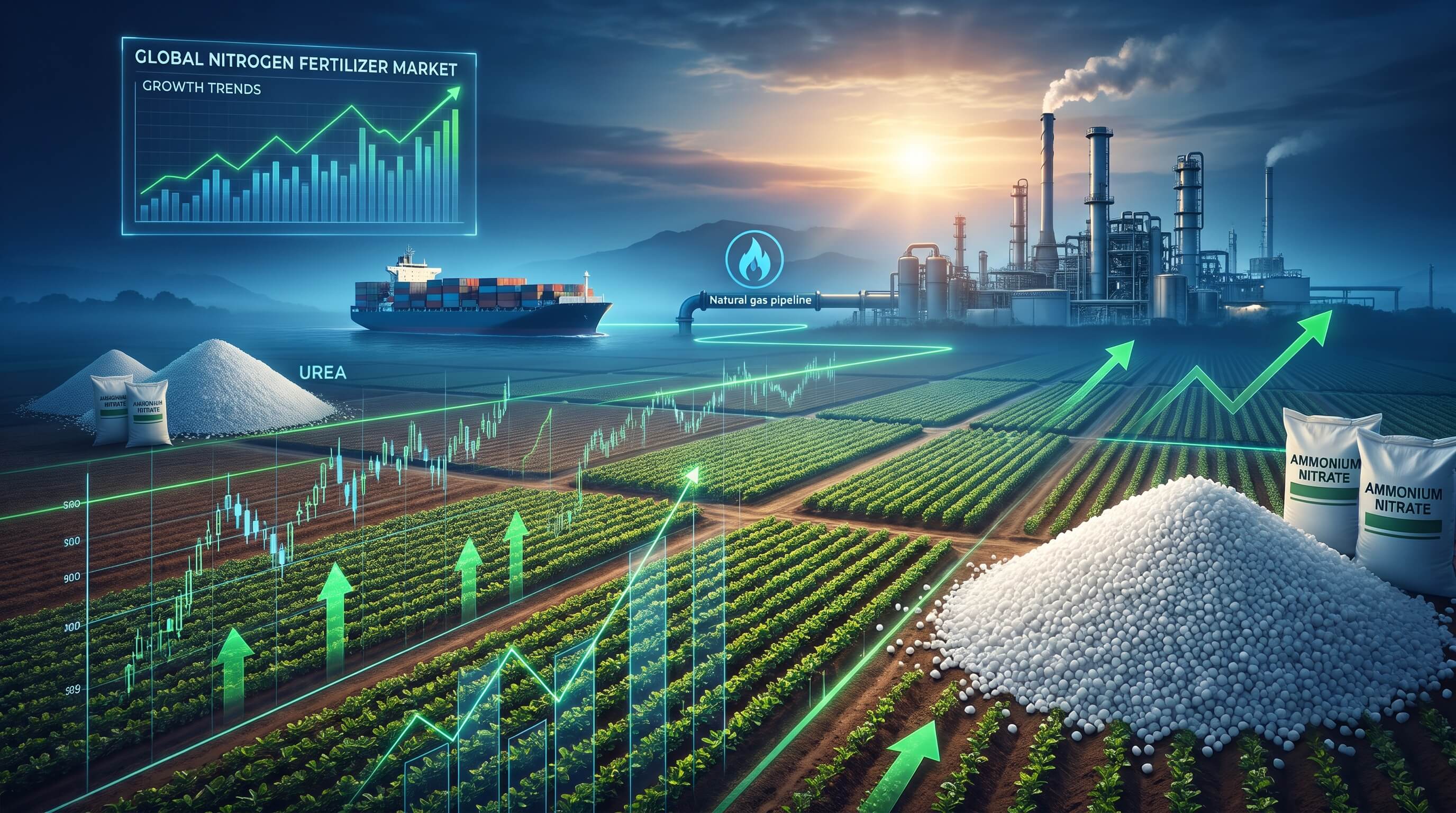
The global nitrogen fertilizer market has reached a definitive turning point, shaking off weeks of seasonal stagnation and shifting into an aggressive upward trajectory. The primary trigger for this abrupt rebound was the outcome of a major Indian government import tender, where Chinese and international suppliers maintained a unified stance and rejected steeply discounted bids. Consequently, the buying agency secured barely a quarter of its intended volumes, setting off an immediate chain reaction of price gains across every major export hub.
For Ukrainian agribusinesses, which are currently concluding their autumn field operations and preparing input strategies for the 2027 spring season, this global realignment carries immediate operational consequences. As the window for low-cost spot procurement abruptly closes, domestic agricultural producers face escalating replacement costs and tightening availability of nitrogen products. Navigating these volatile dynamics requires a clear understanding of global supply constraints, feedstock economics, and international freight challenges to avoid costly procurement delays ahead of early spring fertilization.
Key Market Developments and Supply Discipline
The resilience demonstrated by major producers during the recent tender cycle effectively removed downside pressure from the international market. Rather than succumbing to aggressive buyer discounting, global nitrogen suppliers opted to defend profit margins, confident that unmet demand in South Asia would soon force a return to the negotiating table. With substantial unsatisfied demand remaining for the ongoing winter crop cycle, another international purchasing round is widely anticipated within weeks, ensuring continuous competition for uncommitted production.
Export hubs in the Mediterranean and the Americas responded almost instantaneously to this firming sentiment. Granular urea offers from North Africa—particularly Egypt and Algeria—surged rapidly as European traders stepped in to cover open short positions. In the Western Hemisphere, barge and paper values on the US Gulf rallied for first-quarter positions, carrying substantial premiums over prompt delivery. Simultaneously, Brazilian importers returned from local holidays with renewed buying momentum, securing volumes for their critical summer planting campaign despite escalating offer prices.
However, an objective market analysis reveals conflicting market pressures. While structural costs are pushing fertilizer values higher, international crop commodity prices remain relatively subdued, squeezing farm-level operating margins across multiple agricultural basins. This dynamic introduces the possibility of selective demand resistance if prices accelerate too rapidly. Nevertheless, in the European and Black Sea theaters, physical supply availability and energy-driven production costs continue to outweigh buyer hesitations, reinforcing the upward trajectory.
Deep Market Analysis: Energy Shocks and Regional Realities
The underlying catalyst sustaining the rally across the European continent is the severe volatility in energy markets. Escalating maritime security concerns surrounding commercial navigation in the Strait of Hormuz have injected substantial geopolitical risk into global hydrocarbons. Concurrently, regional natural gas benchmarks on the Title Transfer Facility (TTF) have surged to fresh multi-month highs, compounded by forecasts of below-normal temperatures arriving across Northwest Europe.
According to the World Bank Commodity Markets Outlook, energy price indices posted a remarkable leap of over 25% at the onset of autumn, amplifying structural cost pressures across energy-intensive manufacturing, most notably synthetic nitrogen fertilizers.
For European chemical producers, this natural gas spike is economically prohibitive. Elevated feedstock costs have driven marginal production expenses well above existing finished-product prices, triggering fresh operational curtailments and plant shutdowns across the continent. Official statistics from Eurostat demonstrate that the European Union remains heavily reliant on external suppliers, importing nearly 30% of its annual synthetic nitrogen requirements. With local manufacturing crippled by energy overheads, European buyers have aggressively turned toward spot imports of granular urea from North Africa and Nigeria, directly crowding out traditional import flows into adjacent regional markets.
Regulatory Complexities and Nitrate Market Dynamics
The regulatory backdrop adds another layer of complexity. Although European fertilizer trade associations have formally withdrawn anti-dumping complaints concerning Eastern-origin urea, this development offers little practical relief to market supply. Inflows remain heavily restricted by standard customs tariffs, specific punitive import levies, and the looming financial liabilities associated with the EU Carbon Border Adjustment Mechanism (CBAM). When combined with ongoing rail transport congestion at Baltic loading terminals, the prospect of any sudden influx of affordable supply remains remote.
The pressure is equally acute across alternative nitrogen products. Calcium ammonium nitrate (CAN) and ammonium nitrate (AN) availability across Central Europe remains severely constrained due to high feedstock costs in Poland and ongoing logistics disruptions along the Rhine River. In the liquid fertilizer segment, UAN solutions are supported by tight regional manufacturing capacity and firm replacement values. Meanwhile, global ammonium sulphate markets remain supported by restricted export quotas in China and solid import appetite from South American agribusinesses.
Implications for the Ukrainian Agricultural Sector
The domestic agricultural landscape in Ukraine mirrors these global tensions. Reports from the Ministry of Agrarian Policy and Food of Ukraine confirm that winter grain sowing has progressed across several million hectares, with winter wheat accounting for the vast majority of intended areas alongside nearly completed winter rapeseed planting. However, extensive autumn soil moisture deficits across key central and southern oblasts mean that crops will require robust, early-season nitrogen top-dressing to support tillering and root development once spring vegetative growth resumes.
Furthermore, assessments from the Food and Agriculture Organization (FAO) underscore that global agricultural input supply chains remain exposed to freight disruptions and geopolitical bottlenecks. With Ukrainian domestic synthesis constrained by security and infrastructure risks, agricultural holdings and independent farmers rely extensively on maritime and overland imports. Cargoes moving through Danube river ports or western rail border hubs must now compete directly against European distributors willing to pay substantial premiums for prompt delivery.
Strategic Outlook and Actionable Sourcing Takeaways
Over the next one to three months, the nitrogen complex is poised to maintain upward momentum. As colder weather sets in, European gas consumption will keep domestic production costs elevated, preventing any meaningful resumption of idled capacity. The imminent return of Indian tender buying will absorb surplus prilled urea volumes in the East, while Western-origin granular material will be supported by persistent European and transatlantic import requirements. Deferring purchasing decisions under these conditions exposes agribusinesses to both higher baseline price levels and severe logistical congestion in the first quarter.
Current market conditions present a well-defined strategic window. While spot prices have begun their ascent, current levels remain advantageous compared to projected early-spring replacement costs. Locking in required allocations of granular urea, ammonium nitrate, and liquid UAN today mitigates the risk of delivery bottlenecks, rail car shortages, and border delays when regional seasonal demand reaches its zenith.
Navigating these turbulent markets requires working alongside established import partners who possess seasoned international trade intelligence, multi-origin sourcing flexibility, and integrated domestic logistics networks. Such partnerships provide the necessary supply security to protect operating margins and ensure timely field application.
Contact our specialized trade desk today to review product availability, secure seasonal volume allocations, and receive an updated commercial quote tailored to your farm's operational schedule.
, end
Key Market Developments and Supply Discipline
, good structure and length. Let's check English word count: ~900 words. Within 800-1200 wo